Research

Research Projects

The Political and Civic Applications Division (PCAD): PCAD develops software to support research into information environments. Its first application, PIEGraph, collects full Twitter feed data from a representative panel of participants, enabling a holistic study of the role of low-quality information in context. Their latest release, PykTok, is a TikTok scraper to capture videos and metadata for research.

Critical Disinformation Studies: The concept of disinformation does not account for vast social, cultural, and political differences in how people distinguish between legitimate and illegitimate forms of persuasion—or the long histories behind strategically false information. The Critical Disinfo Studies project rethinks the assumptions behind disinformation research and expands on what “counts” as disinformation.

CITAP Digital Politics: Tech platforms and digital media have fundamentally changed electoral politics. CITAP Digital Politics publishes resources tracking and analyzing how platform policies, state laws, and ethics shape how campaigns communicate with voters. Recent reports include tracking platform policies on U.S. political speech and state laws governing election misinformation.

Election Coverage and Democracy network (ECAD): ECAD is a collection of scholarly experts in politics & media which offered practical, nonpartisan, evidence-based recommendations to journalists covering the 2020 election.

Disinformation in Context (DisC): DisC investigates how people come to believe fringe, extremist, and conspiratorial views they encounter online. DisC researchers spend time in fringe internet communities to understand the complexities of “radicalization" and focus on how power and identity shape these communities' beliefs.

The Search Prompt Integrity and Learning Lab (SPILL): The SPILL team seeks to identify search keywords curated for nefarious purposes and understand how these keywords draw on their target communities’ identities and deep stories. Their work includes efforts to predict keyword curation before data voids are filled and to understand how search keywords are used across different languages and cultural contexts.

Future Journalism: Widespread social media usage has changed the business model and practice of journalism, while threats to democratic governance require new frames for covering politics and providing accountability. The Future Journalism project produces insights and recommendations for navigating these changes.

Child Online Safety Legislation: This group of researchers investigates legislation focused on child safety on social platforms, including the UK Online Safety Act, the US Kids Online Safety Act (KOSA), and state bills in Utah, Texas, California, and Louisiana (to name a few). We are interested in the empirical evidence behind these bills, larger “moral panics” around youth and technology, and such legislation’s potential impact on the lives and well-being of young people. 


Research Outputs

Militant Platform Democracy: A Framework for Democracy-Worthy Platform Policies

August 6, 2026

Daniel Kreiss’ and Lorcan Neill’s commentary draws on the long-established concept of militant democracy” to outline ‘democracy-worthy principles’ for commercial platform content moderation.

Enclosure and Exit in New Tech Urbanisms

June 22, 2026

Sun-ha Hong writes on how speculative urban projects advance a logic of radical separation from public space, visibility and accountability, underwritten by tech elites’ consistent and increasingly explicit denunciation of the very idea of democratic governance.

Inaccuracies, Omissions, and Bullshit: 2024 U.S. Elections Through the Eyes of ChatGPT.

June 22, 2026

Heesoo Jang, and Shannon C. McGregor, and Lorcan Neill evaluated the accuracy, quality, and implications of outputs produced by generative artificial intelligences (AI) related to politics and electoral processes during the 2024 United States elections.

Unbundling Digital Media Literacy Tips: Results from Two Experiments

May 30, 2026

Recent studies have found promising evidence that lightweight, scalable tips promoting digital media literacy can improve the overall accuracy of social media users’ sharing intentions and improve their ability to determine the accuracy of true versus false headlines. However, existing research is designed to test entire bundles of such tips, which limits our practical knowledge about whether some kinds of tips are more effective than others and hinders our ability to theorize about mechanisms.

Activating Prejudice: Refugee Disinformation as Information Warfare in Russia’s War on Ukraine

May 26, 2026

This paper analyzes online Russian disinformation campaigns about Ukrainian refugees in Europe to better understand their impact upon target groups. Although disinformation can mislead audiences because of its verisimilitude with authoritative media sources, Julie Terebkov, Torin Monahan, and Alice E. Marwick argue that its deeper potency rests in activating existing cultural biases.

Abolition Feminist Storytelling as Methodology: Lessons Within the Stories We (Re)Tell About Punishment and Violence

April 22, 2026

Amber Joy Powel’s, Faith M. Deckard’s, Shannon Malone Gonzalez’s, and Brittany Pearl Battle’s paper engages abolition feminist storytelling as a methodology for feminist criminologists to identify, reflect on, grapple with, and ultimately confront carceral logics in the stories we (re)tell about violence and punishment.

Disinformation as Cultural Narrative: Conceptualizing Disinformation as Cross-Platform, Identity-Affirming, Cathartic Stories

April 6, 2026

Rather than framing disinformation as false facts which can be countered by true facts, we propose a model of disinformation as narrative by tracing three case studies of successful disinformation across Facebook and Twitter.

Disinformation in the US: Overview and Responses

January 12, 2026

The field of disinformation has emerged as a significant topic of study in the US, especially in the wake of the country’s democratic backsliding and the rise of new artificial intelligence technologies that could drastically impact information environments writ large.

Grounded Under a Blue Sky: Tools for Disrupting the Peer Review Process As We Know It

December 27, 2025

This article provides an introduction to a scholarly forum on intersectional approaches to challenging the peer-review process. Developed out of a Blue Sky session at the International Communication Association’s annual conference in 2025, the article and the forum discuss ways to build out of the strength of differences with practical insights that can be adopted throughout the publication process to advance critical scholarship.

Refractive Datasets as a Sensemaking Methodology in Closed Data Ecosystems

December 18, 2025

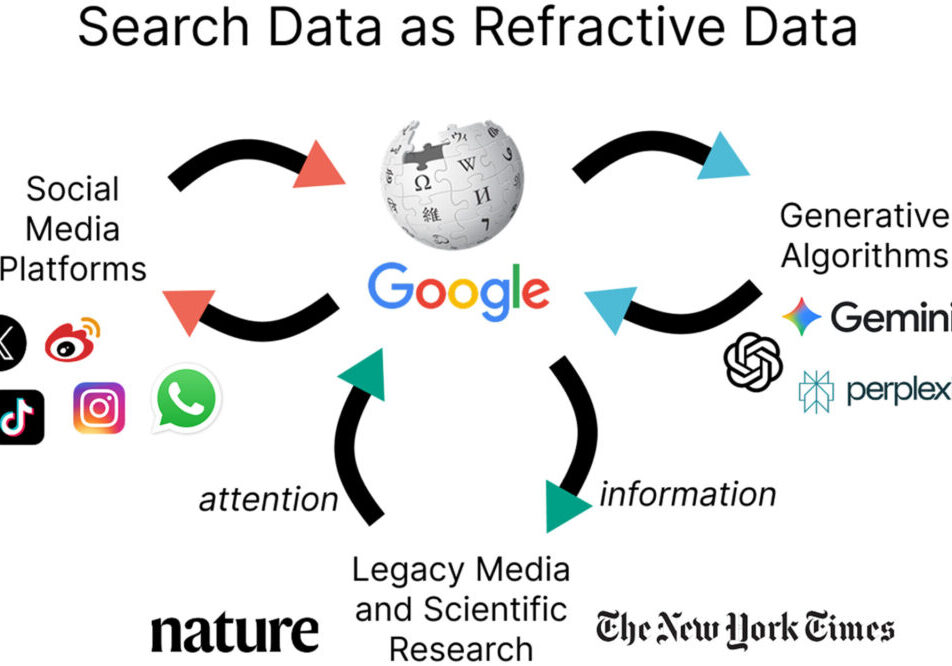
Various CITAP scholars discuss how refractive datasets can be a way for researchers to “sensemake” in increasingly opaque big data environments, enabling interpretivist analyses which aim to generate new hypotheses rather than verify existing claims.